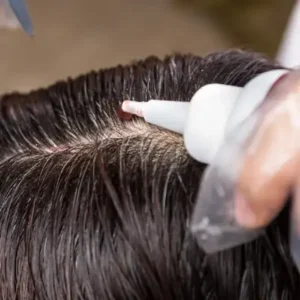
Microneedling uses fine needles to create tiny channels that prompt the skin to make collagen. RF microneedling adds radiofrequency heat through those needles for a stronger firming effect. Chemical peels use an acid solution to remove damaged outer layers and brighten tone. Microneedling suits texture and early lines, RF microneedling suits texture with mild laxity, and peels suit dullness and uneven pigment.
Key takeaways
- All three trigger controlled renewal; they differ in depth, method and recovery.
- Peels work from the surface down. Needling works from within the skin.
- A superficial peel heals in 1 to 7 days and is usually done as a series of 3 to 5, per the AAD.
- RF microneedling is a medical procedure. The FDA advises choosing a trained, licensed provider.
- Sun protection after any of these is non-negotiable in Florida.
Medical-grade facials are the workhorses of a medspa menu. They sit between a relaxing spa facial and a laser, and they are where many women over 35 begin when over-the-counter products stop delivering. The three most common options sound similar and get confused constantly. This guide explains each one, compares them side by side and helps you match a treatment to your skin.
How each treatment works
Microneedling
A device with very fine, sterile needles makes thousands of microscopic channels in the skin. The skin responds by producing new collagen and elastin as it repairs. Because the channels are open briefly, providers often pair the treatment with a serum. At Glowtique, that pairing is built into the name: the Glow Micro-Needling Facial with Vitamin C and the Micro-Needling Hyaluronic Facial.
RF microneedling
Here the needles also deliver radiofrequency energy, which heats the tissue around each needle tip. The added heat is intended to create more tightening than needling alone. It is still a needle-based procedure with numbing and recovery time.
Chemical peels
An acid solution is applied to loosen and remove damaged outer layers of skin. Peels are classed by depth. The American Academy of Dermatology describes superficial peels, sometimes called lunchtime peels, medium peels and deep peels, with very different recovery times. Medspas typically perform superficial to medium peels.
Side-by-side comparison
| Microneedling | RF microneedling | Chemical peel (superficial) | |
|---|---|---|---|
| Method | Fine needles | Needles plus radiofrequency heat | Acid solution |
| Main targets | Texture, pores, early lines, mild scarring | Texture plus mild laxity | Dullness, uneven tone, rough surface |
| Numbing | Topical, typically | Topical, typically | Usually none |
| Typical recovery | A few days of redness | Several days of redness and swelling | 1 to 7 days, with possible scaling |
| Usual plan | A series | A series | 3 to 5 peels, 2 to 5 weeks apart |
Peel figures: American Academy of Dermatology. Recovery varies by person, depth and settings.
Which one matches your concern?
- Dull, uneven or sun-spotted skin: start with a peel. It refreshes the surface and evens tone.
- Rough texture, enlarged pores or fine lines: microneedling works within the skin to rebuild smoothness.
- Texture plus early looseness: RF microneedling adds heat for a firming effect.
- Loss of firmness without texture concerns: a needle-free option such as XERF may be a better fit than any facial.
- Deeper wrinkles or scars: consider fractional laser resurfacing.
What the AAD says about peels
The American Academy of Dermatology gives clear benchmarks:
- Superficial peels heal in 1 to 7 days. Skin is red at first, and scaling may last 3 to 7 days. A series of 3 to 5 peels, repeated every 2 to 5 weeks, may be needed.
- Medium peels heal in 7 to 14 days. Makeup can usually be worn after 5 to 7 days. Total sun avoidance is advised until the skin heals.
- Deep peels are performed once, in a surgical setting, and require two to three weeks of recovery at home. They are not a medspa service.
The AAD also notes that results depend largely on the skill of the person performing the peel, and that picking at peeling skin raises the risk of infection and scarring.
Have a question about Med Spa Facials? Book a consultation online, call (239) 977-4569, or email our team and we will reply with details.
What the FDA says about RF microneedling
In October 2025 the U.S. Food and Drug Administration issued a safety communication about RF microneedling devices. The agency reported that it had received reports of serious complications, including burns, scarring, fat loss, disfigurement and nerve damage, and said its evaluation is ongoing. It did not name specific brands.
The FDA’s advice to patients is useful for any device-based treatment: discuss risks and benefits with your provider, choose someone licensed, trained and experienced with the device, ask which device will be used, and remember that RF microneedling is a medical procedure that should never be done at home.
Who performs this treatment? What training do they have on this specific device? Which physician oversees the medspa? What should I do if I have a concern afterward? Clear answers are a good sign.
Aftercare that protects your results
- Sunscreen every day. The AAD recommends applying sunscreen daily once the skin has healed and avoiding tanning beds. In Naples, add a hat.
- Hands off. Do not pick, scrub or exfoliate while skin is healing.
- Keep it simple. Use only the gentle cleanser and moisturizer your provider recommends until you are cleared to resume active ingredients such as retinoids or acids.
- Plan around events. See our holiday treatment timeline for scheduling.
Medical-grade facials at Glowtique
Our Naples menu includes the Glow Micro-Needling Facial with Vitamin C, the Glow RF Microneedling Facial, Morpheus8 RF microneedling, the Micro-Needling Hyaluronic Facial, chemical peels and micro peels. Medspa services are overseen by our Medical Director, Dr. Antonio Gonzalez. A consultation determines which treatment, depth and schedule are appropriate for your skin type and history. See the med spa facial menu.
Frequently asked questions
What is the difference between microneedling and RF microneedling?
Microneedling uses fine needles alone to stimulate collagen. RF microneedling delivers radiofrequency heat through the needles for an added firming effect. Both involve needles and some recovery time.
Is a chemical peel or microneedling better for wrinkles?
Microneedling works within the skin and is generally chosen for texture and fine lines. Superficial chemical peels work on the surface and are generally chosen for dullness and uneven tone. Deeper wrinkles may call for laser resurfacing. A provider should examine your skin first.
How long does it take to recover from a chemical peel?
According to the American Academy of Dermatology, a superficial peel heals in 1 to 7 days and a medium peel in 7 to 14 days.
Is RF microneedling safe?
RF microneedling devices are FDA cleared. In October 2025 the FDA reported serious complications in some cases, including burns, scarring and fat loss, and advised patients to choose licensed, trained providers and to ask which device will be used.
How many microneedling sessions will I need?
Microneedling is typically done as a series, with the number of sessions depending on your concern and how your skin responds. Your provider will recommend a plan at your consultation.
Talk with the Glowtique team
Tell us what you would like to improve and we will explain your options, expected recovery and pricing before you decide anything.
Book a consultationEmail us for detailsRelated: Med Spa Facials at Glowtique in Naples, FL · XERF vs. Morpheus8 · Laser resurfacing compared
Sources
This article is for general education and is not medical advice. Services at Glowtique Salon & MedSpa are provided after an individual consultation; results, the number of sessions and recovery vary from person to person, and no outcome is guaranteed. Prices shown are starting prices as of November 2026 and may change. Device and brand names are trademarks of their respective owners.