Hair thinning after 40 is common. The American Academy of Dermatology says female pattern hair loss is the most common cause of hair loss in women and usually begins in the 40s, 50s or 60s, becoming more common after menopause. Start with a dermatologist to confirm the cause. Minoxidil is the most recommended treatment, and the right cut, color and styling can make hair look noticeably fuller.
Key takeaways
- Female pattern hair loss affects millions of women and typically starts in midlife.
- A widening part and overall thinning on top are the classic signs; the hairline usually stays.
- See a doctor first. Several treatable conditions also cause shedding.
- Minoxidil is the treatment the AAD describes as most recommended.
- Strategic cut, color dimension and gentle styling create visible fullness right away.
You notice more scalp at your part. Your ponytail feels thinner. The drain needs clearing more often. For many women this starts in the 40s or 50s, and it can be more unsettling than any wrinkle. The good news is that thinning hair is common, well studied and manageable. This guide covers what is going on, what medicine offers and what a skilled stylist can do today.
Why hair thins in midlife
The most frequent cause is female pattern hair loss, known medically as FPHL. The American Academy of Dermatology describes it as the most common cause of hair loss in women, affecting millions. For most women it begins in midlife, in the 40s, 50s or 60s, and it is more common after menopause, which suggests hormones play a role. Genetics matter too.
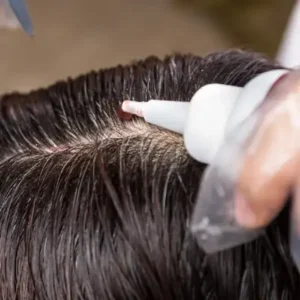
FPHL looks different from male balding. Women usually keep their hairline. Instead, the part gradually widens and hair on the top and crown becomes finer and sparser.
Other things can cause shedding, including thyroid conditions, low iron, certain medications, significant stress, illness and rapid weight loss. Tight hairstyles worn for years can also thin the hairline.
When to see a doctor
A stylist can help hair look fuller, but cannot diagnose why it is thinning. See a board-certified dermatologist or your physician if you notice:
- Sudden or rapid shedding
- Round or patchy bald spots
- Scalp itching, burning, pain or scaling
- Thinning along with fatigue or other new symptoms
- Any hair loss that worries you
Early evaluation matters, because treatment generally works better at preserving hair than at regrowing it.
What dermatologists recommend
The AAD states that minoxidil is the most recommended treatment for female pattern hair loss. It is available over the counter in 2% and 5% strengths. A dermatologist can advise which is appropriate, how to use it and what other options exist. Be wary of supplements and gadgets that promise dramatic regrowth without evidence.
Hair grows about half an inch a month, so any treatment takes several months to judge. Take a photo of your part in the same light once a month. It is more reliable than memory.
What your stylist can do right now
While medical treatment works slowly, the right salon choices change how hair looks the same day.
- Choose a cut that builds weight. Blunt or softly layered shapes between the chin and collarbone make ends look thicker. Very long hair pulls flat and exposes the scalp.
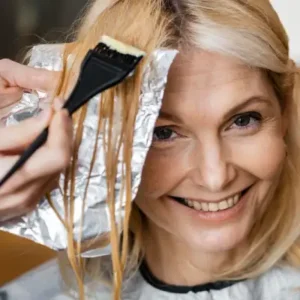
- Use color for dimension. Fine highlights and lowlights add visual depth, and reducing the contrast between hair and scalp makes a part less noticeable. Lightening also slightly swells the hair shaft, which adds body.
- Move your part. A side or zigzag part hides widening and adds lift.
- Blow-dry for volume. Drying the roots up and away from the scalp with a round brush creates lift that lasts. A professional blowout shows you the technique.
- Treat the scalp and strands kindly. Conditioning and protein treatments reduce breakage, so the hair you have stays longer.
Have a question about Hair Services? Book a consultation online, call (239) 977-4569, or email our team and we will reply with details.
Habits that protect fragile hair
| Do | Avoid |
|---|---|
| Use a gentle shampoo and always condition | Tight ponytails, buns and extensions that pull |
| Pat hair dry and detangle from the ends up | Rough towel drying and brushing while soaking wet |
| Use heat protectant and moderate heat | Daily high-heat flat ironing |
| Protect hair from Florida sun with a hat | Long, unprotected days in sun, salt and chlorine |
| Space chemical services sensibly | Overlapping bleach or relaxers on already-processed hair |
Color and thinning hair: is it safe?
Professional color does not cause female pattern hair loss, which begins in the follicle. Over-processing can cause breakage, which makes hair look thinner. An experienced colorist will adjust formulas and timing for fine or fragile hair and may recommend gentler techniques such as glosses or carefully placed highlights. If you are also dealing with gray, see our guide to gray blending vs. full coverage.
Hair services at Glowtique
Our Naples stylists work with fine and thinning hair every day. Women’s haircuts start at $65, wash and style at $35, and partial highlights at $90, with conditioning treatments available. For guests who love regular blowouts, the GlowOut Bar membership includes two wash and blow-dry services a month for $90. Our medspa menu also includes ULTRA laser treatments; ask at your consultation whether any medspa service is appropriate for you. See the full hair menu.
Frequently asked questions
Is it normal for hair to thin after 40?
Yes. The American Academy of Dermatology says female pattern hair loss is the most common cause of hair loss in women and that for most women it begins in midlife, in the 40s, 50s or 60s. It is more common after menopause.
What is the best treatment for female pattern hair loss?
The AAD states that minoxidil is the most recommended treatment for female pattern hair loss. It is available in 2% and 5% strengths. A dermatologist can confirm the diagnosis and recommend a plan.
What haircut makes thin hair look thicker?
Blunt or softly layered cuts between chin and collarbone length generally make fine hair look fuller, because the ends hold more weight. Your stylist will tailor the shape to your face and hair pattern.
Does coloring hair make thinning worse?
Professional color does not cause female pattern hair loss. Over-processing can cause breakage, so tell your stylist about thinning so formulas and techniques can be adjusted.
When should I see a doctor about hair loss?
See a dermatologist or physician if shedding is sudden, patchy, accompanied by scalp symptoms or other health changes, or simply worrying you. Several treatable conditions can cause hair loss.
Talk with a stylist about fuller-looking hair
Book a consultation and we will look at your part, density and texture, then suggest a cut, color placement and styling routine that works with your hair.
Book a consultationEmail us for detailsRelated: Hair Services at Glowtique in Naples, FL · Gray blending vs. full coverage · Menopause and your skin
Sources
This article is for general education and is not medical advice. Services at Glowtique Salon & MedSpa are provided after an individual consultation; results, the number of sessions and recovery vary from person to person, and no outcome is guaranteed. Prices shown are starting prices as of November 2026 and may change. Device and brand names are trademarks of their respective owners.